Glen Moray hopes to temp whisky fans with the latest addition to its Xperience Collection, Forbidden Fruit. This novel single malt is finished in casks that previously held Calvados, the historic apple brandy of Normandy.
The whisky continues the Elgin distillery’s long-running interest in cask experimentation. Forbidden Fruit follows earlier Xperience bottlings Phoenix Rising, which explored charred oak, and Twisted Vine, matured in Cognac casks. With this latest expression, the distillery turns its attention to apple brandy and the distinctive flavour influence it can bring to Scotch whisky.
The Luxe Review had the opportunity to taste the whisky early during a virtual session hosted by Brand ambassador Iain Allan. The format may have been digital, but the dram itself is comfortably old-fashioned.
Forbidden Fruit begins life as Glen Moray spirit matured in traditional bourbon casks before undergoing a finishing period in French oak barrels that once held Calvados…
A Speyside distillery with a taste for experimentation
Founded in 1897 on the banks of the River Lossie in Elgin, Glen Moray has spent much of the past century refining a house style known for gentle fruitiness and approachability. In recent years the distillery has also expanded its range into several themed collections, each exploring a different aspect of maturation and flavour.
The Xperience Collection is designed to showcase more unusual cask influences and invites drinkers to explore the interaction between wood and spirit.
Forbidden Fruit begins life in traditional bourbon casks, before undergoing a finishing period in French oak barrels that once held Calvados. The result is a bottling that draws on the orchard character of the apple brandy, while maintaining the smooth Speyside style for which the distillery is known.
“Interestingly, the Glen Moray New Make spirit, if I’m asked to describe that in two words, is toffee apple. So we’re already starting with a New Make that has a baseline characteristic of apples within it,” explains Allan. “It’s got a lovely kind of green apple note within the Glen Moray New Make spirit. So with Calvados, what we expected prior to filling these casks was to accentuate that, to embolden that apple note within the New Make. And I think this whisky does that wonderfully well.”
The use of Calvados casks has only recently become possible for Scotch whisky producers. For many years, regulations set by the Scotch Whisky Association limited the types of casks permitted for maturation.
Rule changes introduced in 2019 expanded that list to include casks previously used for spirits such as Calvados, tequila and mezcal. For distillers interested in exploring new flavour territory, the update opened the door to a fresh category of finishing casks.
Forbidden Fruit takes full advantage. As Allan explains: “Forbidden Fruit is roughly seven years old. We’re looking at five years in bourbon, a mix of first and second fill American white oak, then two years finishing in Calvados casks.”
The resulting liquid blends apple sweetness, and spice with the distillery’s signature vanilla character.
“Five years or so maturing in bourbon cask is roughly the age of our Classic expression. So you’re getting within it a lovely kind of sweet vanilla, a kind of slight gingery characteristic. And then we get the Calvados influence going through on it.”
Intriguingly, Allan adds: “We’ve got some longer mature stock. So there’s an opportunity… so we’ll, you know, possibly be looking at a fully matured release in the future. Who knows?”
The Forbidden Fruit moniker carries a small note of humour within the brand’s history. Allan notes that the title also nods to a brief controversy surrounding an ill-fated 2017 cider-cask experiment, which generated industry debate (cider casks were not sanctioned at the time) but also brought wider attention to the distillery’s willingness to explore unconventional maturation.
Glen Moray Forbidden Fruit tasting notes
On the nose there’s an unmistakable orchard character. Green apples lead the way, followed by toffee, and the aroma of sweet pastries. Imagine sauntering past a patisserie window on a bright spring morningen route to doing some scrumping..
On the palate, the whisky becomes wonderfully dessert-like. Apple pie and baking spice appear alongside vanilla custard and barley sugar, albeit with a delicate acidity that keeps the sweetness in check.
The finish lingers. Initial spice fades into soft oak notes, joined by poached pears and honey.
Forbidden Fruit sits comfortably in the easy-drinking territory Glen Moray has cultivated for years. It retains the distillery’s familiar smoothness, while the Calvados influence introduces an orchard freshness that should appeal both to casual drinkers and those curious about cask experimentation.
At 40% ABV it’s approachable and versatile. There’s no doubt it will work well in cocktails and long drinks, and is easy to imagine it as a refreshing summer highball, where the apple character would sit naturally alongside soda and ice.
Glen Moray Forbidden Fruit sells for £32, and is available from Master of Malt and selected stores operated by Morrisons across Scotland.
One of the more intrigung new whiskies to launch this month is Cù Bòcan Creation #9. The product of American virgin oak and Manzanilla sherry casks, it’s a sweet and sour treat notable both for its flavour profile and affordability. But what’s the deal with Cù Bòcan and the distillery behind the label? It turns…
There are worse ways to spend a Sunday than eating unlimited pizza and pasta while someone dutifully tops up your Prosecco. In fact, forget the Sunday roast. If your idea of a superior weekend involves truffle pasta, wood-fired pizza and a bottomless Aperol Spritz in the middle of Soho, Bocconcino has cracked it. The name…
Pusser’s Rum is bringing its founding recipe back to life with a limited-edition bottling inspired by the extraordinary story of its founder, Charles Tobias. The new Pusser’s Rum Founder’s Reserve Limited Edition meticulously recreates the first rum blended by Tobias in 1979, the recipe that helped establish the brand’s reputation for characterful Caribbean rum. Founder’s…

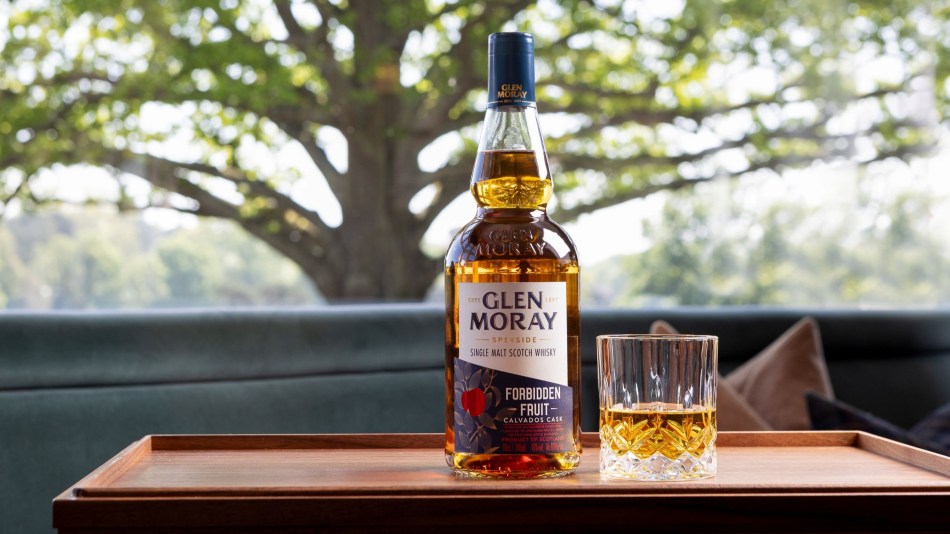


Glen Moray hopes to temp whisky fans with the latest addition to its Xperience Collection, Forbidden Fruit. This novel single malt is finished in casks that previously held Calvados, the historic apple brandy of Normandy.
The whisky continues the Elgin distillery’s long-running interest in cask experimentation. Forbidden Fruit follows earlier Xperience bottlings Phoenix Rising, which explored charred oak, and Twisted Vine, matured in Cognac casks. With this latest expression, the distillery turns its attention to apple brandy and the distinctive flavour influence it can bring to Scotch whisky.
The Luxe Review had the opportunity to taste the whisky early during a virtual session hosted by Brand ambassador Iain Allan. The format may have been digital, but the dram itself is comfortably old-fashioned.
A Speyside distillery with a taste for experimentation
Founded in 1897 on the banks of the River Lossie in Elgin, Glen Moray has spent much of the past century refining a house style known for gentle fruitiness and approachability. In recent years the distillery has also expanded its range into several themed collections, each exploring a different aspect of maturation and flavour.
The Xperience Collection is designed to showcase more unusual cask influences and invites drinkers to explore the interaction between wood and spirit.
Forbidden Fruit begins life in traditional bourbon casks, before undergoing a finishing period in French oak barrels that once held Calvados. The result is a bottling that draws on the orchard character of the apple brandy, while maintaining the smooth Speyside style for which the distillery is known.
“Interestingly, the Glen Moray New Make spirit, if I’m asked to describe that in two words, is toffee apple. So we’re already starting with a New Make that has a baseline characteristic of apples within it,” explains Allan. “It’s got a lovely kind of green apple note within the Glen Moray New Make spirit. So with Calvados, what we expected prior to filling these casks was to accentuate that, to embolden that apple note within the New Make. And I think this whisky does that wonderfully well.”
The use of Calvados casks has only recently become possible for Scotch whisky producers. For many years, regulations set by the Scotch Whisky Association limited the types of casks permitted for maturation.
Rule changes introduced in 2019 expanded that list to include casks previously used for spirits such as Calvados, tequila and mezcal. For distillers interested in exploring new flavour territory, the update opened the door to a fresh category of finishing casks.
Forbidden Fruit takes full advantage. As Allan explains: “Forbidden Fruit is roughly seven years old. We’re looking at five years in bourbon, a mix of first and second fill American white oak, then two years finishing in Calvados casks.”
The resulting liquid blends apple sweetness, and spice with the distillery’s signature vanilla character.
“Five years or so maturing in bourbon cask is roughly the age of our Classic expression. So you’re getting within it a lovely kind of sweet vanilla, a kind of slight gingery characteristic. And then we get the Calvados influence going through on it.”
Intriguingly, Allan adds: “We’ve got some longer mature stock. So there’s an opportunity… so we’ll, you know, possibly be looking at a fully matured release in the future. Who knows?”
The Forbidden Fruit moniker carries a small note of humour within the brand’s history. Allan notes that the title also nods to a brief controversy surrounding an ill-fated 2017 cider-cask experiment, which generated industry debate (cider casks were not sanctioned at the time) but also brought wider attention to the distillery’s willingness to explore unconventional maturation.
Glen Moray Forbidden Fruit tasting notes
On the nose there’s an unmistakable orchard character. Green apples lead the way, followed by toffee, and the aroma of sweet pastries. Imagine sauntering past a patisserie window on a bright spring morningen route to doing some scrumping..
On the palate, the whisky becomes wonderfully dessert-like. Apple pie and baking spice appear alongside vanilla custard and barley sugar, albeit with a delicate acidity that keeps the sweetness in check.
The finish lingers. Initial spice fades into soft oak notes, joined by poached pears and honey.
Forbidden Fruit sits comfortably in the easy-drinking territory Glen Moray has cultivated for years. It retains the distillery’s familiar smoothness, while the Calvados influence introduces an orchard freshness that should appeal both to casual drinkers and those curious about cask experimentation.
At 40% ABV it’s approachable and versatile. There’s no doubt it will work well in cocktails and long drinks, and is easy to imagine it as a refreshing summer highball, where the apple character would sit naturally alongside soda and ice.
Glen Moray Forbidden Fruit sells for £32, and is available from Master of Malt and selected stores operated by Morrisons across Scotland.
Ghost Dog Vs distillery: The story behind Cù Bòcan, Tomatin’s experimental Highland spirit
One of the more intrigung new whiskies to launch this month is Cù Bòcan Creation #9. The product of American virgin oak and Manzanilla sherry casks, it’s a sweet and sour treat notable both for its flavour profile and affordability. But what’s the deal with Cù Bòcan and the distillery behind the label? It turns…
Bocconcino Review: Unlimited Pizza, Pasta, Prosecco And Spritzes? This Might Be London’s Dreamiest Sunday Brunch
There are worse ways to spend a Sunday than eating unlimited pizza and pasta while someone dutifully tops up your Prosecco. In fact, forget the Sunday roast. If your idea of a superior weekend involves truffle pasta, wood-fired pizza and a bottomless Aperol Spritz in the middle of Soho, Bocconcino has cracked it. The name…
Pusser’s Rum revives its original 1979 blend with limited edition Founder’s Reserve
Pusser’s Rum is bringing its founding recipe back to life with a limited-edition bottling inspired by the extraordinary story of its founder, Charles Tobias. The new Pusser’s Rum Founder’s Reserve Limited Edition meticulously recreates the first rum blended by Tobias in 1979, the recipe that helped establish the brand’s reputation for characterful Caribbean rum. Founder’s…
Share this: