One of the more intrigung new whiskies to launch this month is Cù Bòcan Creation #9. The product of American virgin oak and Manzanilla sherry casks, it’s a sweet and sour treat notable both for its flavour profile and affordability.
But what’s the deal with Cù Bòcan and the distillery behind the label? It turns out that their story is just as engaging as the dram.
Cù Bòcan, in case you’ve not encountered it before, is the experimental single malt produced at Tomatin Distillery, in the Scottish Highlands, near Inverness. The name draws on Gaelic folklore. ‘Cù’ means dog, while ‘bòcan’ can mean goblin or ghoul. The titular ‘ghost dog’ references a spirit said to haunt the distillery’s hometown.
Cù Bòcan’s origins lie in Tomatin’s own history with peat. Established in 1897, the distillery once relied on local peat supplies to fire its stills. Production gradually shifted towards unpeated whisky during the middle of the 20th century, reflecting changing tastes and the demands of the blended Scotch market.
In 2005, Tomatin revisited its peated roots. During the final week of production that year, the distillery used peated Optic barley to produce approximately 60,000 litres of lightly peated spirit, at around 15 parts per million phenols. The whisky was filled into a variety of cask types, providing the foundation for what would become Cù Bòcan.
The spirit was eventually introduced as a standalone single malt in 2013, initially matured in a combination of bourbon, sherry and virgin oak casks. The brand was subsequently reworked, with its experimental identity and limited-edition releases becoming increasingly central to its appeal.
The Creation series has explored an unusually broad range of casks. Previous editions have included Moscatel, stout-seasoned, sochu wine, Moroccan rye, Colombian Andean oak, Jamaican rum, Pinot de France and Canadian ice wine influences.
We rate Cù Bòcan Creation #9 as an exceptional value, at £45. The release is limited to 3,800 bottles worldwide. Secure yours before the ghost dog devours them all.
The Creation series has explored an unusually broad range of casks…
A Highland distillery with an international story
As for Tomatin, its history reflects some of the major changes that have shaped the Scotch whisky industry over the past century.
Founded in 1897, the distillery expanded significantly during the post-war whisky boom. By 1975, it had grown to 23 stills, with annual spirit production approaching 13 million litres. At the time, Tomatin was among the largest malt whisky distilleries in Scotland, with much of its output destined for blended Scotch.
The whisky downturn of the 1980s brought difficult trading conditions. Tomatin entered receivership before being acquired in 1986 by Kyoto-based Takara Shuzo, then best known for sake and shochu.
That Japanese ownership is now central to Tomatin’s identity. The distillery has developed a community-led operating culture and continues to combine established production methods with a willingness to experiment. Its portfolio encompasses Tomatin Highland single malt, Cù Bòcan, The Antiquary, Talisman and Big T.
Tomatin’s maturation infrastructure is substantial. Its 12 warehouses have capacity for approximately 200,000 casks, with around 165,000 currently stored, explains Garrow. That stock provides the distillery with a broad palette of maturing spirit and cask influences to draw upon.
The approach behind Cù Bòcan’s Creation releases reflects this depth of experience. Scott Adamson, Master Blender and Global Brand Ambassador at Tomatin, works with the wider team to identify unusual casks and explore potential combinations through repeated sample blending.
There’s no fixed formula. In the case of Creation #9, the starting point was an exceptional, long-matured virgin-oak cask. Manzanilla was then selected to temper its sweetness and spice while introducing a distinctly savoury dimension.
Bunnahabhain has released the latest edition of its annual 12 Year Old Cask Strength whisky, bottled at 55.8% ABV. The 2026 expression brings together 12-year-old whisky matured in an equal split of first-fill Oloroso sherry and bourbon casks. Bottled at natural cask strength, it promises a rich, full-bodied interpretation of the Islay distillery’s unpeated single…
Bardinet is bringing a little French bistro style to the drinks cabinet with a limited-edition seasonal bottle of its VSOP brandy, accompanied by four festive cocktail recipes. The new design features an illustrated label inspired by the character of a traditional French bistro. It marks the third consecutive year Bardinet has produced a seasonal limited…
For Hennessy, great cognac belongs at the table as much as it belongs in the glass. Few names carry as much weight in the world of cognac as Hennessy. Founded in 1765, the maison has spent more than two and a half centuries refining its craft, building a reputation for consistency, patience and an unwavering…

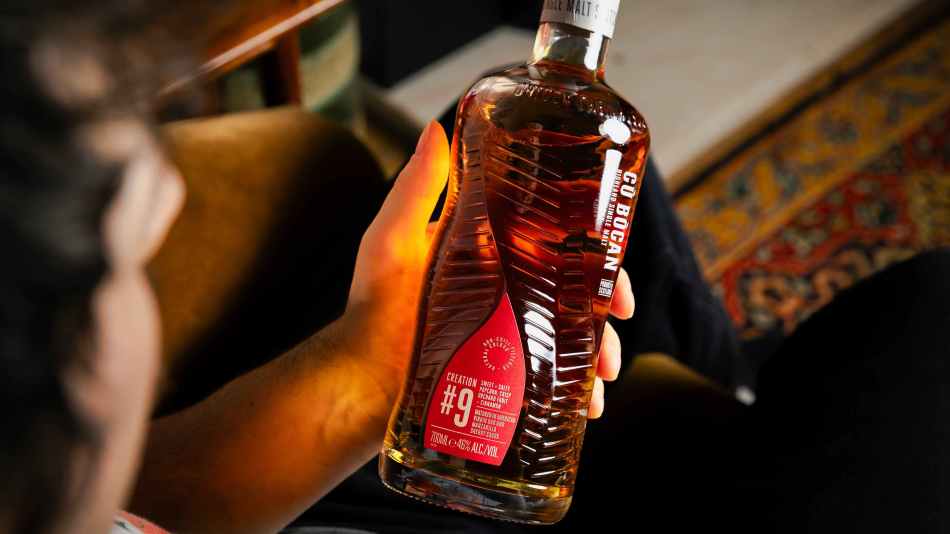


One of the more intrigung new whiskies to launch this month is Cù Bòcan Creation #9. The product of American virgin oak and Manzanilla sherry casks, it’s a sweet and sour treat notable both for its flavour profile and affordability.
But what’s the deal with Cù Bòcan and the distillery behind the label? It turns out that their story is just as engaging as the dram.
Cù Bòcan, in case you’ve not encountered it before, is the experimental single malt produced at Tomatin Distillery, in the Scottish Highlands, near Inverness. The name draws on Gaelic folklore. ‘Cù’ means dog, while ‘bòcan’ can mean goblin or ghoul. The titular ‘ghost dog’ references a spirit said to haunt the distillery’s hometown.
Cù Bòcan’s origins lie in Tomatin’s own history with peat. Established in 1897, the distillery once relied on local peat supplies to fire its stills. Production gradually shifted towards unpeated whisky during the middle of the 20th century, reflecting changing tastes and the demands of the blended Scotch market.
In 2005, Tomatin revisited its peated roots. During the final week of production that year, the distillery used peated Optic barley to produce approximately 60,000 litres of lightly peated spirit, at around 15 parts per million phenols. The whisky was filled into a variety of cask types, providing the foundation for what would become Cù Bòcan.
The spirit was eventually introduced as a standalone single malt in 2013, initially matured in a combination of bourbon, sherry and virgin oak casks. The brand was subsequently reworked, with its experimental identity and limited-edition releases becoming increasingly central to its appeal.
The Creation series has explored an unusually broad range of casks. Previous editions have included Moscatel, stout-seasoned, sochu wine, Moroccan rye, Colombian Andean oak, Jamaican rum, Pinot de France and Canadian ice wine influences.
We rate Cù Bòcan Creation #9 as an exceptional value, at £45. The release is limited to 3,800 bottles worldwide. Secure yours before the ghost dog devours them all.
A Highland distillery with an international story
As for Tomatin, its history reflects some of the major changes that have shaped the Scotch whisky industry over the past century.
Founded in 1897, the distillery expanded significantly during the post-war whisky boom. By 1975, it had grown to 23 stills, with annual spirit production approaching 13 million litres. At the time, Tomatin was among the largest malt whisky distilleries in Scotland, with much of its output destined for blended Scotch.
The whisky downturn of the 1980s brought difficult trading conditions. Tomatin entered receivership before being acquired in 1986 by Kyoto-based Takara Shuzo, then best known for sake and shochu.
That Japanese ownership is now central to Tomatin’s identity. The distillery has developed a community-led operating culture and continues to combine established production methods with a willingness to experiment. Its portfolio encompasses Tomatin Highland single malt, Cù Bòcan, The Antiquary, Talisman and Big T.
Tomatin’s maturation infrastructure is substantial. Its 12 warehouses have capacity for approximately 200,000 casks, with around 165,000 currently stored, explains Garrow. That stock provides the distillery with a broad palette of maturing spirit and cask influences to draw upon.
The approach behind Cù Bòcan’s Creation releases reflects this depth of experience. Scott Adamson, Master Blender and Global Brand Ambassador at Tomatin, works with the wider team to identify unusual casks and explore potential combinations through repeated sample blending.
There’s no fixed formula. In the case of Creation #9, the starting point was an exceptional, long-matured virgin-oak cask. Manzanilla was then selected to temper its sweetness and spice while introducing a distinctly savoury dimension.
You might say the result is almost supernatural.
Explore the world of Tomatin whisky at The Whisky Exchange here.
Bunnahabhain 12 Year Old Cask Strength 2026 edition is a rich, sherried Islay whisky
Bunnahabhain has released the latest edition of its annual 12 Year Old Cask Strength whisky, bottled at 55.8% ABV. The 2026 expression brings together 12-year-old whisky matured in an equal split of first-fill Oloroso sherry and bourbon casks. Bottled at natural cask strength, it promises a rich, full-bodied interpretation of the Islay distillery’s unpeated single…
Bardinet gives best-selling VSOP brandy a seasonal makeover, suggests four festive cocktail recipes
Bardinet is bringing a little French bistro style to the drinks cabinet with a limited-edition seasonal bottle of its VSOP brandy, accompanied by four festive cocktail recipes. The new design features an illustrated label inspired by the character of a traditional French bistro. It marks the third consecutive year Bardinet has produced a seasonal limited…
“We’re on a quest to push the boundaries of quality!” says Hennessey cognac Master Blender
For Hennessy, great cognac belongs at the table as much as it belongs in the glass. Few names carry as much weight in the world of cognac as Hennessy. Founded in 1765, the maison has spent more than two and a half centuries refining its craft, building a reputation for consistency, patience and an unwavering…
Share this: