A new spirits house showcasing novel Asian ingredients and distilling traditions has launched with four core expressions spanning vodka, gin, whisky and rum.
Founded by entrepreneur Michel Lu, The Orientalist Spirits positions itself as an ‘all-Asian’ portfolio, drawing on ingredients, techniques and flavour profiles sourced from across the continent. Lu, whose background spans fashion, music and hospitality, says the idea emerged from a perceived gap in the market – a lack of premium Asian spirits designed to sit confidently on the world’s best bar shelves.
That concept began to take shape during a stay at a high-altitude eco-resort in Shangri-La, on the Tibetan plateau.
“At that altitude, 3300 metres above sea level, the only grain that survives is a barley. Tibetan barley. The locals consume it as food, they also make us alcohol with it… “
From there, Lu embarked on a wider journey across Asia, sourcing raw materials and inspiration for a range that now includes four permanent expressions.
The idea for The Orientalist Sirits began to take shape during a stay at a high-altitude eco-resort in Shangri-La, on the Tibetan plateau…
The story behind The Orientalist Spirits
Michel Lu created The Orientalist out of a conviction that every spirit must have a clear reason to exist. For him, that starts with liquid you actually want to drink neat: everything he makes “must be sippable by itself” – if it needs a mixer just to be swallowable, it fails his test. That philosophy drives a refusal to produce ‘me‑too’ products in crowded categories like vodka and gin.
Instead of chasing flavoured gimmicks, Lu focuses on “character and personality,” carefully controlling flavour so the spirits remain elegant, layered and drinkable on their own.
Commercially, Lu positions The Orientalist as “slightly premium” rather than ultra‑luxury, with price points that most people can reasonably stretch to, whether as an occasional treat or a weekly staple. Behind that sits a very hands‑on approach: rather than making a single base vodka, he blends three distinct distillates, and every bottle carries three hand‑applied labels, attached by a small team in Taiwan.
For Lu, the product must pass his own taste test first; the brand only exists because he believes in drinking these spirits himself.
Of the branding, Lu says: “I like to think we at least convey a little bit of mystical Asia. Some people have said that the branding reminds them of Dr Strange, the Marvel superhero. It kind of makes sense. The Tibetan Plateau is magical, and mystical. I’m intrigued by that part of Asia…”
The brand line-up made its debut at an exclusive launch event at The Aubrey in Knightsbridge, where The Luxe Review was invited to sample the range.
The evening paired the spirits with bespoke cocktails created by leading mixologists, offering an early look at how the liquids perform both neat and in mixed serves. And, yes, the serves were spellbinding…
The Orientalist Spirits range in-depth
At the heart of the collection is The Orientalist Origins Vodka (40% ABV, £45). This ‘triple blended’ spirit combines Taiwanese longan honey, Tibetan highland barley and nine varieties of potato, before being proofed with soft water from Japan’s Sakurajima Peninsula.
The result is a vodka with a rounded, creamy texture and a gentle aromatic sweetness, alongside subtle earthy undertones. Lu says it’s intended to stand on its own, rather than simply disappear into a mixer – although it lends itself well to a bone-dry martini or Vesper.
The Orientalist 12 Year Old Dragon Whisky (43% ABV, £60) brings together component whiskies from Japan, Taiwan and India. The blend is double wood matured and finished in Oloroso sherry casks, adding depth and richness. In the glass, it shows a deep amber hue, with notes of dried dates, red fruits and dark chocolate, supported by aromas of vanilla, raisin, apricot, spice and a gentle thread of smoke.
Lu confided that the composition is broadly weighted towards Japanese whisky, with a blend that’s 80 per cent Japanese, 10 per cent Taiwanese, and 10 per cent Indian.
The Orientalist Gunpowder Gin (40% ABV, £52) takes a different route, using both traditional distillation and low-temperature vacuum techniques to preserve delicate aromatics. It’s built around 23 botanicals, including gunpowder tea, Kampot peppercorn, Korean omija berries, Siberian ginseng and dried tangerine peel. The resulting profile is crisp and citrus-led, with a light spiciness and a clean, balanced finish. The subtle smokiness from the tea provides a distinctive twist, particularly in classic serves such as a martini or negroni.
Rounding out the range is The Orientalist Solera 23 Imperial Rum (43% ABV, £55), a blended rum created from spirits aged between six and 23 years in Thailand, the Philippines and Indonesia.
Produced from first-press sugar cane and distilled in copper-lined column stills, it’s matured using a solera system in ex-bourbon and Pedro Ximénez casks. The style is deliberately drier than many contemporary rums, with Lu expressing a preference for using it in an Espresso Martini, where its restrained sweetness allows other flavours to come through.
Can The Orientalist redefine premium Asian spirits on the global stage?
Throughout the range, there’s a clear emphasis on regional ingredients – from longan honey and Tibetan barley to tea, ginseng and Asian botanicals – brought together in a way that reflects both tradition and modern cocktail culture.
Lu says the ambition is not just to create individual spirits, but to build a cohesive house style that will appeal to drinkers looking for something different. “There’s a lot of, truly, a lot of heart that goes into this.”
The first four expressions from The Orientalist Spirits are available from Master of Malt. Further releases, including sake collaborations and limited-edition whiskies, are in development.
English sparkling wine has come of age. Popping corks to celebrate two decades of production, Gusbourne recently held a unique tasting of 13 vintages from the last 20 years, including an extremely rare sampling of its 2006 bottling. The idea behind the retrospective was to examine the evolution of its sparkling wines, vineyards, and winemaking…
Monkey 47 has revealed oyster mushroom as the unusual 48th botanical in its latest limited-release Distiller’s Cut gin, bringing savoury umami notes to its traditional Black Forest spirit. Now in its 16th year, the annual Distiller’s Cut sees Monkey 47 search for a Species Rara: an exceptional ingredient that adds a new dimension to its…
The Borders Distillery in Hawick has unveiled its first single malt, marking the return of whisky production to the Scottish Borders for the first time since 1837. Limited to 10,000 bottles, the eight-year-old inaugural release has been matured in first-fill bourbon casks and finished in Malmsey Madeira casks. For managing director Giancarlo Bianchi, this debutant…

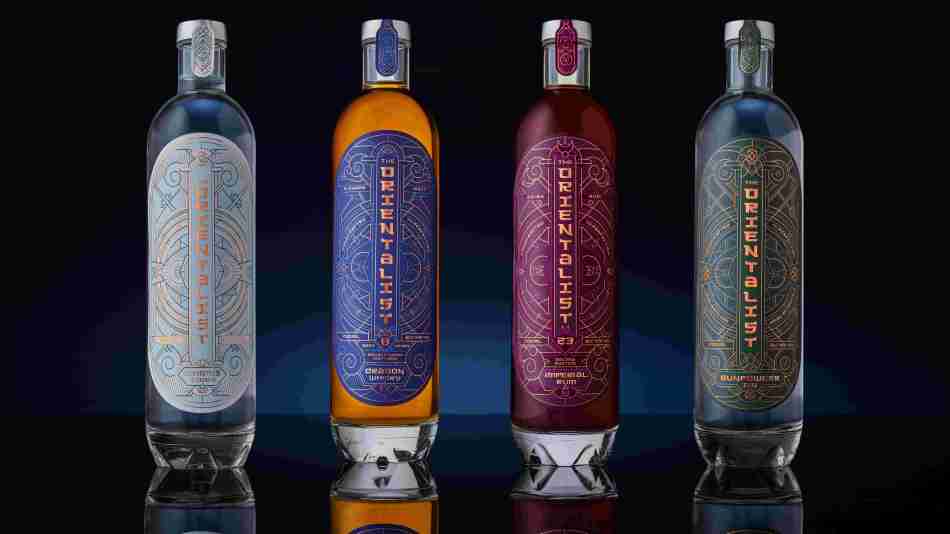


A new spirits house showcasing novel Asian ingredients and distilling traditions has launched with four core expressions spanning vodka, gin, whisky and rum.
Founded by entrepreneur Michel Lu, The Orientalist Spirits positions itself as an ‘all-Asian’ portfolio, drawing on ingredients, techniques and flavour profiles sourced from across the continent. Lu, whose background spans fashion, music and hospitality, says the idea emerged from a perceived gap in the market – a lack of premium Asian spirits designed to sit confidently on the world’s best bar shelves.
That concept began to take shape during a stay at a high-altitude eco-resort in Shangri-La, on the Tibetan plateau.
“At that altitude, 3300 metres above sea level, the only grain that survives is a barley. Tibetan barley. The locals consume it as food, they also make us alcohol with it… “
From there, Lu embarked on a wider journey across Asia, sourcing raw materials and inspiration for a range that now includes four permanent expressions.
The story behind The Orientalist Spirits
Michel Lu created The Orientalist out of a conviction that every spirit must have a clear reason to exist. For him, that starts with liquid you actually want to drink neat: everything he makes “must be sippable by itself” – if it needs a mixer just to be swallowable, it fails his test. That philosophy drives a refusal to produce ‘me‑too’ products in crowded categories like vodka and gin.
Instead of chasing flavoured gimmicks, Lu focuses on “character and personality,” carefully controlling flavour so the spirits remain elegant, layered and drinkable on their own.
Commercially, Lu positions The Orientalist as “slightly premium” rather than ultra‑luxury, with price points that most people can reasonably stretch to, whether as an occasional treat or a weekly staple. Behind that sits a very hands‑on approach: rather than making a single base vodka, he blends three distinct distillates, and every bottle carries three hand‑applied labels, attached by a small team in Taiwan.
For Lu, the product must pass his own taste test first; the brand only exists because he believes in drinking these spirits himself.
Of the branding, Lu says: “I like to think we at least convey a little bit of mystical Asia. Some people have said that the branding reminds them of Dr Strange, the Marvel superhero. It kind of makes sense. The Tibetan Plateau is magical, and mystical. I’m intrigued by that part of Asia…”
The brand line-up made its debut at an exclusive launch event at The Aubrey in Knightsbridge, where The Luxe Review was invited to sample the range.
The evening paired the spirits with bespoke cocktails created by leading mixologists, offering an early look at how the liquids perform both neat and in mixed serves. And, yes, the serves were spellbinding…
The Orientalist Spirits range in-depth
At the heart of the collection is The Orientalist Origins Vodka (40% ABV, £45). This ‘triple blended’ spirit combines Taiwanese longan honey, Tibetan highland barley and nine varieties of potato, before being proofed with soft water from Japan’s Sakurajima Peninsula.
The result is a vodka with a rounded, creamy texture and a gentle aromatic sweetness, alongside subtle earthy undertones. Lu says it’s intended to stand on its own, rather than simply disappear into a mixer – although it lends itself well to a bone-dry martini or Vesper.
The Orientalist 12 Year Old Dragon Whisky (43% ABV, £60) brings together component whiskies from Japan, Taiwan and India. The blend is double wood matured and finished in Oloroso sherry casks, adding depth and richness. In the glass, it shows a deep amber hue, with notes of dried dates, red fruits and dark chocolate, supported by aromas of vanilla, raisin, apricot, spice and a gentle thread of smoke.
Lu confided that the composition is broadly weighted towards Japanese whisky, with a blend that’s 80 per cent Japanese, 10 per cent Taiwanese, and 10 per cent Indian.
The Orientalist Gunpowder Gin (40% ABV, £52) takes a different route, using both traditional distillation and low-temperature vacuum techniques to preserve delicate aromatics. It’s built around 23 botanicals, including gunpowder tea, Kampot peppercorn, Korean omija berries, Siberian ginseng and dried tangerine peel. The resulting profile is crisp and citrus-led, with a light spiciness and a clean, balanced finish. The subtle smokiness from the tea provides a distinctive twist, particularly in classic serves such as a martini or negroni.
Rounding out the range is The Orientalist Solera 23 Imperial Rum (43% ABV, £55), a blended rum created from spirits aged between six and 23 years in Thailand, the Philippines and Indonesia.
Produced from first-press sugar cane and distilled in copper-lined column stills, it’s matured using a solera system in ex-bourbon and Pedro Ximénez casks. The style is deliberately drier than many contemporary rums, with Lu expressing a preference for using it in an Espresso Martini, where its restrained sweetness allows other flavours to come through.
Can The Orientalist redefine premium Asian spirits on the global stage?
Throughout the range, there’s a clear emphasis on regional ingredients – from longan honey and Tibetan barley to tea, ginseng and Asian botanicals – brought together in a way that reflects both tradition and modern cocktail culture.
Lu says the ambition is not just to create individual spirits, but to build a cohesive house style that will appeal to drinkers looking for something different. “There’s a lot of, truly, a lot of heart that goes into this.”
The first four expressions from The Orientalist Spirits are available from Master of Malt. Further releases, including sake collaborations and limited-edition whiskies, are in development.
Beyond Champagne: Why Gusbourne Is leading England’s sparkling wine revolution
English sparkling wine has come of age. Popping corks to celebrate two decades of production, Gusbourne recently held a unique tasting of 13 vintages from the last 20 years, including an extremely rare sampling of its 2006 bottling. The idea behind the retrospective was to examine the evolution of its sparkling wines, vineyards, and winemaking…
Monkey 47 Distiller’s Cut 2026 adds oyster mushroom to gin recipe for savoury umami twist
Monkey 47 has revealed oyster mushroom as the unusual 48th botanical in its latest limited-release Distiller’s Cut gin, bringing savoury umami notes to its traditional Black Forest spirit. Now in its 16th year, the annual Distiller’s Cut sees Monkey 47 search for a Species Rara: an exceptional ingredient that adds a new dimension to its…
The Borders Distillery Eight Year Old inaugural whisky builds on cashmere and tweed heritage
The Borders Distillery in Hawick has unveiled its first single malt, marking the return of whisky production to the Scottish Borders for the first time since 1837. Limited to 10,000 bottles, the eight-year-old inaugural release has been matured in first-fill bourbon casks and finished in Malmsey Madeira casks. For managing director Giancarlo Bianchi, this debutant…
Share this: